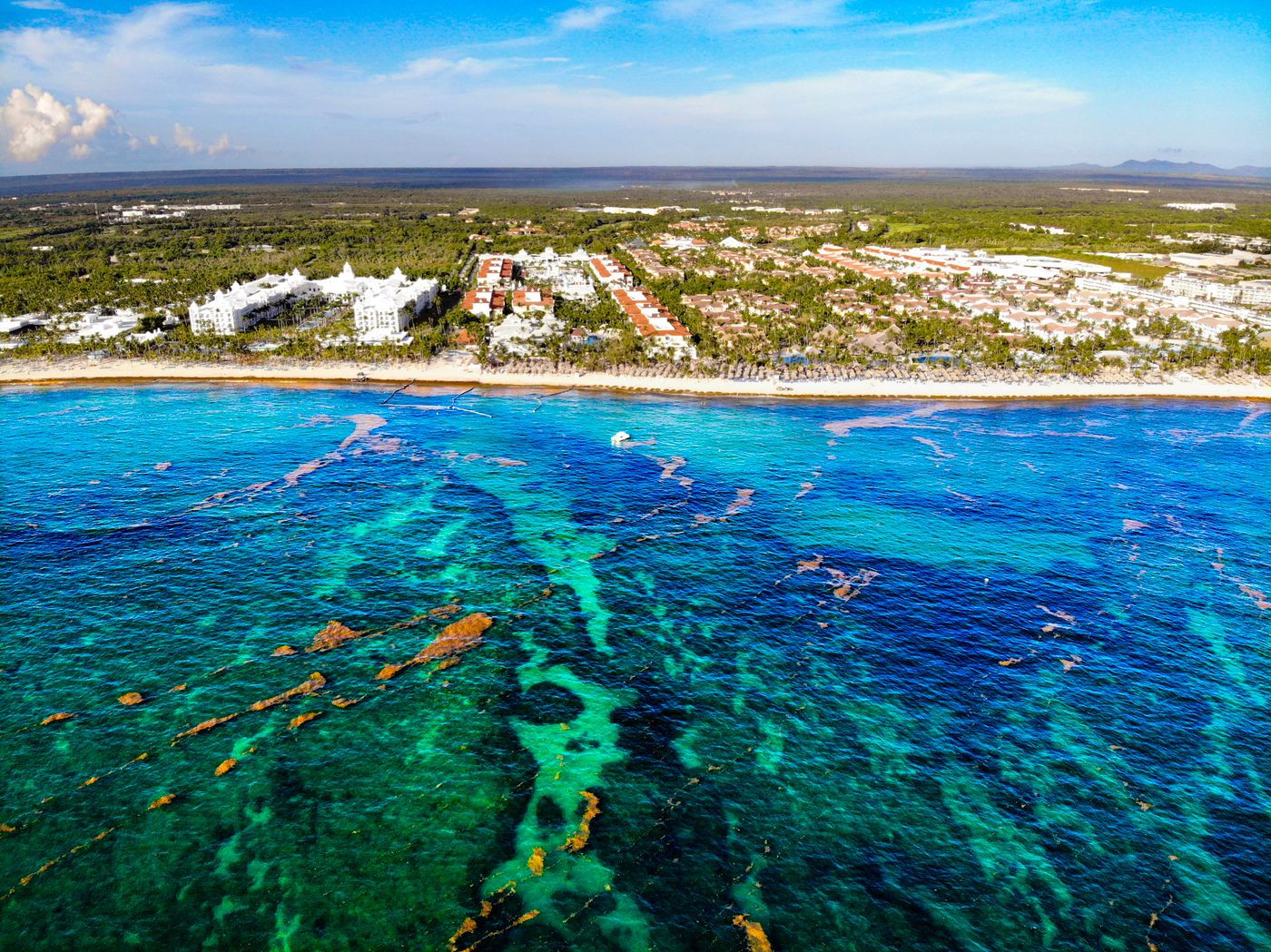
On 23 February 2024, Egypt's prime minister announced what he called one of the biggest deals of its kind in the country's modern history. Abu Dhabi's sovereign investment vehicle, ADQ, would lead a consortium investing $35 billion in Egypt: $24 billion for the development rights to Ras El-Hekma, a 170-square-kilometre stretch of Mediterranean coast about 350 kilometres northwest of Cairo, and a further $11 billion converted from existing deposits into projects across the country.1 The Egyptian government retained a 35 percent stake in the development. The timing was not incidental. Egypt was in the grip of its worst foreign-exchange crisis in decades, the pound collapsing against the dollar on the black market, and the fresh inflow, $15 billion within a week and $20 billion within two months, shored up the country's reserves and helped clear the way for a scaled-up IMF programme the following month.1 A sovereign wealth fund bought a coastline, and in doing so bought a government time.
Read through the Corridor Index framework, which tracks who owns and who captures the value in a tourism economy, Ras El-Hekma is not a real-estate story. It is the clearest single instance of a shift this issue is about: the arrival, at scale, of a distinct kind of foreign capital in African tourism. European tourism, the subject of earlier issues, extracts margin through package operators and airlines but rarely owns the ground. Chinese capital, across the past two decades, lent against roads, ports and airports and took repayment, not equity. Gulf sovereign wealth does something different. It takes ownership of the asset itself, the coast, the flag carrier, the island, the airport terminal, and it does so with balance sheets large enough that the sums involved rival the national budgets of the countries receiving them.
The scale of the money
The figures are not marginal, and they are not slowing. As of early 2025, the sovereign wealth funds of the Gulf Cooperation Council collectively managed around $5 trillion in assets, a total projected to reach $7 trillion by 2030, with Saudi Arabia's Public Investment Fund and Abu Dhabi's ADIA each managing over a trillion dollars alone.2 These are not private investors chasing quarterly returns. They are instruments of the state, and a growing share of their attention has turned toward Africa. In September 2025, a single Qatari vehicle, Al Mansour Holdings, toured six African countries in a fortnight and signed partnership frameworks worth a reported $103 billion, including a $10 billion package for Zanzibar covering tourism, the blue economy, ports and energy, and larger commitments still to the Democratic Republic of Congo, Mozambique and Zambia.3 The German Institute for International and Security Affairs, in a February 2026 study, framed exactly this behaviour: Gulf sovereign funds, it argued, now serve not only to convert oil revenue into diversified assets but to expand the foreign-policy capabilities of the states that own them.2 The money is strategic by design.
Aviation: buying the gateway
Nowhere is the ownership logic clearer than in Rwanda. Qatar Airways has agreed to acquire a 49 percent stake in RwandAir, the national carrier, while Rwanda retains 51 percent and the final say; and it holds a 60 percent stake in the new $1.3 billion Bugesera International Airport outside Kigali, due to open by 2028 with an initial capacity of seven million passengers, rising to fourteen million.4 The detail that captures the shift is in the airport's history. Bugesera was first developed with Portugal's Mota-Engil holding an 85 percent stake; the Rwandan government bought the Portuguese construction company out to take full ownership, then handed 60 percent to Qatar.4 European construction capital was replaced, deliberately, by Gulf aviation capital, and Kigali became Qatar Airways' first cargo hub outside Doha. The same pattern of aviation-anchored ownership recurs elsewhere: a Qatar Investment Authority and Accor platform, Kasada, has assembled a portfolio of roughly twenty hospitality properties across sub-Saharan Africa, the quiet hotel-ownership layer beneath the headline airport and coastline deals.5
Coast and island: buying the ground
The coastal and island deals are where the ownership question is sharpest, because land is not a stake in a company but the thing itself. Ras El-Hekma is the largest, but the pattern is regional. In Zanzibar, alongside the Qatari state package, a Dubai-based developer, Infinity Developments, has built a portfolio worth more than $500 million, including the $200 million Anantara resort, positioning itself as one of the island's largest property developers while headquartered in the Gulf.3 In Morocco, the relationship is older and steadier: Gulf capital from the UAE, Qatar and Saudi Arabia has financed hotels, resorts and retail across Casablanca, Rabat and Marrakech for years, reinforced by direct air links through Emirates, Qatar Airways and Saudia, in a country that welcomed more than 17 million tourists in 2024.6 The Moroccan case is the model at rest, a strategic bridge built over a decade; Ras El-Hekma is the same model at full acceleration, compressed into a single signing.
What travels with the money
The working assumption of the celebratory coverage is that this capital is simply welcome, and in the narrow sense it often is: it arrives when Western financing has retreated and when the African Development Bank estimates the continent's annual investment shortfall at some $4 trillion.5 But the Corridor's interest is in what the ownership structure implies, and here the honest evidence is in the deals themselves, not in speculation about secret terms. The conditions are visible in the equity: the government stake retained, the management control ceded, the freehold or development right transferred, the flag carrier part-owned by a foreign state airline. And there is a documented precedent for tourism assets moving explicitly with diplomacy. In 2016, Egypt ceded two Red Sea islands, Tiran and Sanafir, to Saudi Arabia in a transfer widely linked to Saudi investment and aid at a moment of Egyptian economic distress; more recently Saudi Arabia has sought the Ras Ghamila area, a prime Red Sea tourism site near Sharm El-Sheikh.7 When a coastline can be part of a diplomatic settlement, the line between an investment and an instrument of foreign policy is not rhetorical. It is the SWP institute's central point, applied to sand.
European tourism bought the margin. Chinese capital lent against the infrastructure. Gulf sovereign wealth buys the asset itself — and when a coastline can be part of a diplomatic settlement, the investment is also an instrument.
The honest limit of the argument
The suspicion of foreign ownership can curdle into a reflex, and the counter-case deserves a fair hearing. Gulf capital is often genuinely developmental: it builds airports that Rwanda could not finance alone, resorts that employ thousands, and coastal cities that generate real economic activity, and it arrives with patient, long-horizon money of exactly the kind African tourism has struggled to attract. A retained government stake, as in Ras El-Hekma's 35 percent or RwandAir's 51 percent, is not the same as a loss of sovereignty; in several deals the African state kept legal control. And the alternative is frequently not better local ownership but no investment at all. The Corridor's claim is therefore precise rather than alarmist: Gulf capital in African tourism is strategic, asset-controlling and state-directed in a way portfolio investment is not, the conditions it carries are legible in the ownership structures rather than hidden in them, and a host government that treats a $35 billion coastal transfer as ordinary foreign direct investment, rather than as the geopolitical relationship it plainly is, has misread the nature of the money. The capital is real, and often good. It is also never only capital.
Three tests over the next year
The first test is Ras El-Hekma itself: whether the promised $150 billion of downstream investment and the UAE-managed city materialise on the ground, and on what terms Egyptian labour, ownership and revenue participate, since the deal's development phase is where the distribution of value will actually be decided.1 The second is aviation consolidation: whether Qatar Airways' Rwandan model, a minority carrier stake paired with a majority airport stake, becomes the template for further African flag carriers, which would concentrate the continent's gateways in a small number of Gulf hands and reshape the connectivity map this publication will examine in its next issue.4 The third is disclosure: whether African governments and their publics gain any transparency into the conditions attached to these sovereign inflows, or whether the terms remain, as they largely are today, commercial-confidential, visible only in the equity split and legible only after the ground has changed hands. Gulf sovereign wealth is buying the coast. The open question is not whether the money is welcome, but whether the countries selling understand precisely what, along with the coastline, they are agreeing to hold.